Showing posts with label Karnataka. Show all posts

01 July 2016

Monsoon trip to Nandi Hills

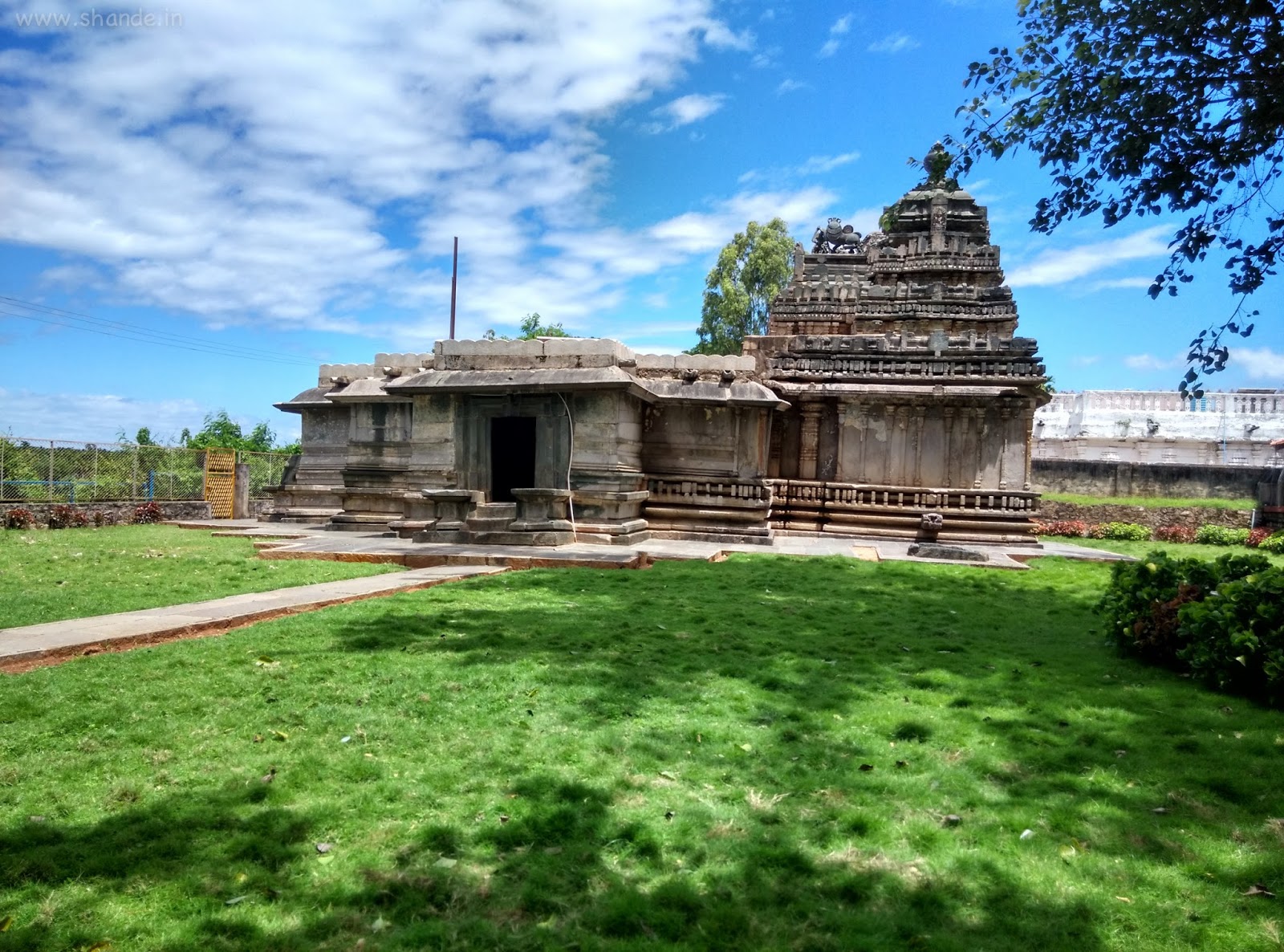
Landscape view besides Yoga Nadeeshwara Temple

It was a trip to mark 10 years of blogging and by reiterating the same trip which had led to my very first blog post. For several reasons, I had a lot of things to compare and contrast between the two trips  - mentioned in my anniversary post. We started from the city in relaxed manner post 12 noon and as expected the traffic towards our destination was very lean. Within no time we managed reached the airport interchange toll booth that too driving with conservative speed.

Lunch at India Paratha House:

India Paratha House

As per our plan, we had a stopover for lunch at India Paratha House which comes after Devanahalli town junction. The eat-out or rather hangout place was brimming with all genres of people - youngsters, families etc. The wooden structure and rot-iron/wooden furniture made up a unique ambiance which was blending perfectly with surrounding environment. The menu comprised various types of stuff parathas,  q-parathas and pizza like parantzas. The parathas, chai and lassis filled our stomach optimally and kept us energized for rest of the day.

Getting to the Top:
After taking a deviation at Nandi Cross we continued our journey to the top. The stretch from the highway to the base of the hill is longer a countryside. There are several real estate developments or being planned. Not sure if we need a golf course, so many layouts and villas at green belt which has soil ideally suited for growing fruits. It's unfortunate to see developers encashing on disposable income of people without valuing the ecology of the sensitive area which is the source of 3 rivers - Arkavathy, Palar and Pennar.

At the top:
We entered into the Nandi Hills by paying Rs. 100 parking and entry fee. Immediately after the parking our car in front of Gandhi Nilaya, one of the monkeys jumped on the top of our car and started licking the top and glass panes. The parking attendant mentioned that due to scarcity of fresh water bodies on the monkey was desperate to consume the droplets :)

Monkey licking water drops

A hill with many attractions:
Since I was visiting Nandi Hills after a lot of years, was very keen to experience of catching the glimpse of downhills landscape from sky decks which were constructed in recent times. After clicking a few photographs from the deck, we had a stroll towards Gandhi Nilaya, the rest house where Gandhiji had stayed during his visit to Bangalore. Further ahead, we came across a small temple dedicated to Nandi(Nellikai Basavanna). Besides that there was an ashrama where some swami had meditated for a year. It started raining for a brief spell of time, since we had equipped ourselves pretty well, didn't face any issues during sightseeing.


Cubbon House - Nehru Nilaya
One of the major landmarks on the hills is Cubbon House - a guest house constructed in 19th century by Mark Cubbon, where he used to stay during summers. Post Independence, this house was renamed as Nehuru Nilaya and was the venue for SAARC summit in 1986.

Yoga Nandeeshwara Temple:
We offered prayers at Yoga Nadeeshwara Temple which is close to Tippu drop. While buying some fancy items inside the temple, we struck an interesting conversation with one of pujaris of the temple. Conversation revolved around philosophical discussions such as : 'Why we have so many gods ?', 'What is this supreme power' etc. Later we came to know that he is native of Mangalore and has been staying at Nandi hills close to 45 years. Previously, he was managing the Mayura Hotel and later when the government took over the hotel, he moved on to pujari's job at the temple.

Hill Station Experience:
Post 5 pm it suddenly turned very misty. It provided us an experience at typical hill station like Ooty, Kodaikanal, Coorg and Chickmagalur.

Engulfed in Mist
To Conclude:
We started our downhill journey around 6 pm. Due to time constraints we could not explore a few landmarks but will ensure to cover it in our next trip. 

The trip which was planned to be an obligatory visit to the hills, surprisingly turned out to be very fruitful experience. Also, felt sorry to witness unwanted real estate development around ecologically and historically significant place close to Bangalore. Hope the sanity prevails and the place is preserved for generations to witness !

27 March 2016

Dr. Shivaram Karanth Theme Park at Kota

In January 2016, we were in our ancestral place Udupi for attending a wedding and visiting a couple of temples on the sidelines. While shuttling between the places, we used to come across a big banner in kannada 'Dr. Shivaram Karanth Theme Park' on the median of NH-17 highway, just before the junction of Kota town.

Pool with Dr. Shivaram Karanth's statue
To quench our curiosity, we very eager to do a flash visit to the place but somehow it didn't materialize for first few days. Later in one of the evenings, we had one hour to spare around Kota and the visit to the theme park was a unanimous choice.

The theme park dedicated to the Jnanapeeta awardee comprises a landscaped garden, a library, an art gallery, an anganawadi and big indoor auditorium. In the garden, there's a small pool with bronze statue of Dr. Karanth in the middle. The life-size statue was made my local artists and one among them is Mr. Janardhana Havanje. The atmosphere around the pond is so serene that one would feel like to sit there for ever and read or write a literary work !

Front Facade

The library has a collection of all the works of the author and also book from his personal collections. In the art gallery, they had exhibited painting and photographs from local artists. Most of the paintings had scenes depicted from Dr. Karanth's novel.


Art Gallery
The gallery type auditorium is one of noteworthy feature of the theme park. According to Mr. Havanje it's one of unique venue in the district and  Udupi district. Every year during birth anniversary of Dr. Karanth ( i.e.  on 10th October) there will be special program to honor noted personalities of Karnataka in the same auditorium. Mr. Ravi Belagere, Salumarada Thinmakka are some of the personalities who have been honored recently.

Auditorium
There's also an anganawadi in the same campus which was closed during our visit. Later we came to know that one of unique features of anganwadi structure is that there's no differentiation between the walls and the ceilings, providing congenial learning environment for young kids.

References:

20 March 2016

Lakshminarayana Temple at Hosaholalu near K.R. Pete

In August 2015, we were on a full day trip on a weekend in Hassan district. After covering Nuggehalli in morning/afternoon, we had been to Mavinakere post lunch and had planned to wind up the day at some Hoysala temple at Krishnarajapete(K.R. Pete). While getting there, the google maps navigation took us in an optimized route but unfortunately the roads were not in that great condition and by the time we reached K.R. Pete it was already dusk time. We were so unprepared for exploring the place that we didn't have the exact name nor the co-ordinates of the temple on our fingertips. Initially thought that we would be able to manage with a quick enquiry with the locals. Later we figured out that the temple which we are planning to visit is in Hosaholalu which is 2 kms from K.R.Pete.

Lakshminarayana Temple at Night time
Hosaholalu was an agrahara built by Hoysalas and was enclosed within a fort during the Vijayanagara rule. The Lakshminarayana temple is a fine example of ornate 3rd generation among Hoysalas temples. Constructed in 13th century, it's a trikuta temple on stellate plan. 

On the exterior, the temple stands on a high raised platform with conventional mouldings. The stellate corners of which are provided with sculptures of elephant denoting ashtadiggajas. 

Sculptures on two and half fee high platform. Stellate Corners with Sculptures of Elephants.
The images carved on the walls are about two and a half feet high. The sculptures of Panduranga, Govardhandhan, Sarasvati, Madhava, Dhanvantari, Dakshinamurti and Mohini are significant amongst the wall sculptures. The friezes and scroll work and the railing panels on the adhishthana are of much interest. 

Carvings of Padmanabha(Gadha, Chakra, Padma, Shanka) and Garuda carrying Lakshmi+narayana

Backside of the temple. The multi-tier structure of which is also prominent in Chennakeshava temple, Belur.
The images revolving around the chaturvimshati(24 names) aspect of Vishnu and other deities are interrupted by double-storeyed chariot-like shrines at west, north, and south of the stellate garbhagriha.

Shikara of the temple with cloudy backdrop
The sides and mahanasa of the sukanasa are also well carved. A closed mandapa built of granite blocks towards east which is later addition of 17th century, disturbs the original layout plan of the temple built of soapstone(chloritic schist).

Dwaja sthambha and Front facade. The additional construction in front spoils the charm of original architecture elements.
Only the main shrine of Laskshminarayana facing east has a sukanasi, a navaranga and a superstructure. The pillars of the navaranga are lathe-turned and well polished. Dancing female sculptures in different mudras adorn the capitals of these pillars. The other two shrines of Venugopala and Lakshminarasimha which are lateral do not have any special feature. Due to low lighting condition in garbhagriha, I could not capture decent photos apart from the part of the ceiling click from my mobile :)

Interior Ceilings of Garbhagriha

Unlike fully protected ASI temple which closes early at 6 pm, this temple maintained by priests and locals is open till 8 pm.
Other interesting thing note was presence of several elderly and educated locals with their grandkids at the time of mahamangalaarthi on Sunday evening. It was good to see older generation imparting values of heritage, culture to the future generation.
Glimpse of Hosahalalu hamlet around the temple
Since we could not explore the temple during our first visit due to darkness, we had plans of revisiting the Hosahalulu with sufficient homework. Fortunately, it materialized within two months when we were on the way back to Bangalore from Coorg. We took a detour from Hunsur and reached Hosaholalu through Krishnarajasagara and Bherya. 

A little bit of drizzle during makes exploration pleasant. But on the day of our second visit, the drizzle got converted into heavy spell of rain and driving on partially waterlogged Hassan-Bangalore highway was a nightmare !
Driving back to Bangalore after second visit was almost close to a nightmare. Due to heavy rains on that day, we decided to return via Nagamangala, Yadiyur to be on safer side. But the drive on NH-48 was not easy, especially on the stretches where it was partially waterlogged.

References:


01 February 2016

Breaking the Somanathapura Jinx !


Side view of Keshava Temple at Somanathapura
A few things in life somehow continue to remain jinx and one of among them for me was visiting famous Hoysala temple in Somanthapura. The place along with Shivanasamudra and Talakadu are obvious locations for a packed day long outing for Bangaloreans. I have visited other two places several times but the Somanathapura was skipped due to some reason or the other. 

Some Flashback:
First time in 1993, our school outing was washed out due to heavy rains on that particular day and our trip was restricted to Shivanasamudra itself. Then in 1999, with my PUC classmates after covering Shivandasamudra in the morning we ended up spending post lunch time in Talakad only and Somanthapura was given a skip since we had to be back in Bangalore early in the evening. In 2004, similar story continued as then newly excavated temples in Talakad took a lot of time to explore. Later in the same year, I ventured out at the same locations in a bike but since it was my first bike-trip to avoid fatigue we returned back early from Shivanasamudra. 

Fast forward 2014, my blogging buddy Shrinidhi Hande had planned for a 24-hour outing around Mysore in a self-drive Toyota Fortunner. After starting the day at Chamundi Hills, breakfast in Mylari(mysore), we made a quick visit to Talakadu and Bharachukki falls. Since a few of our trip mates had to be back in Mysore by lunch, we ended up skipping Somananthapura and after lunch at Mysore, we covered Melukote in the evening and returned to Bangalore via Yadiyur. And thus, the Somananthapura jinx continued. 

Finally, the jinx was broken on 25th December 2015 through a family outing. I was so much particular about the breaking the jinx, the first place which we visited on that day was Somananthapura. Okay now enough about the jinx, let's get into details of the place. 

Getting There: 
There are two routes from Bangalore: one via Kanakapura and other via Maddur. The preference of the route will depend on the present condition of the road. We opted for Bangalore-Maddur-Malavalli route. After breakfast at Shivalli Restaurant at Maddur, we faced under construction patches between Maddur and Malavalli. From Malavalli, a breezy drive took us to Keshava Temple in Somanthapura. 

About the Temple: 
The Keshava temple was constructed by Soma, a high officer under Hoysala king Narasimha III (1254-1291 A.D). It's one of the perfect examples of the Hoysala style of architecture. Standing on a raised platform in the centre of a spacious enclosure having sixty-four cells, this three-celled (trikutachala) structure consists of three garbhagrihas, three antaralas and a navaranga. 

Trikutachala - 3 garbhagrihas, 3 antaralas, 1 navarang ( image source: Gerad Foekema's Book)
It has a mahadwara standing on the east. The statues of Venugopala, Kesava and Janardhana are installed in the cells which are surmounted by elegantly carved sikharas. The statues of Venugopal and Janardhana are in original form. Whereas, the main deity - Keshava's statue was destroyed during Muslim invasion and authorities have placed a smaller replica from outer walls.

Statues of Venugopal, Keshava and Janardhana
The inscriptions engraved on a huge slab standing in the mahadwara and on the beams of the navaranga ranging in date from 1269-1550 A.D. give the details of the construction of the temple and several grants for the upkeep of the temple. In post medieval era, the temple was frequently visited by guests of Mysore royal family and that's one of the reason for this temple being one of major tourist attractions around the royal city.

Mahadwara of Keshava Temple

Sculptures and Architecture: 
The basement of the outer wall is highly ornamented with friezes of elephants scrolls, epic and puranic scenes, small images with intervening turrets and columns with figures in between. The number of gods/goddess (which includes 164 forms of Vishnu) their attendants adorn the walls. The names of a number of sculptors Mallithamma, Masanathamma, Chameya, Bhameya etc are carved on the pedestals of the images.

Friezes of Elephants Scrolls, Epic and Puranic Scenes

Some more details through photographs:
Slab in Halegannada inscription with details about History of the temple.
Postbox inside temple premises. Letters posted here will be delivered  with pictorial cancellation on the stamps.

Shardula: An imaginary animal with the combinations of 7 elements from different animals - Jaw of a Crocodile, Tusk of Elephant, Eyes of a Monkey, Body of a Pig, Legs of a Lion, Tail of a Peacock.
Dhanavantri - Goddess of Medicine
Yoga Narayana: Vishnu in meditating position
Image Compression: Lot of elements depicted in a small space
Horrible patchwork performed by so-called artists from ASI. It would be good to leave such patches empty than spoiling it with unimaginative work

Tip Offs:
  • Do the initial exploration of the temple with the help of a guide. It would be handy to have the details before capturing photographs from different perspectives.
  • Try to be at the temple at early in the morning. You will have a chance to capture the architecture elements in golden hours and not-to-mention you can explore the things peacefully with a negligible crowd.
  • Take a self-addressed envelope/post-card to drop at the post box inside the temple premises. You will be getting it delivered by India Post having a unique cancellation on postage stamp

References:


07 November 2015

Cup of Coffee at Belase Stop(Chickmagalur)

"Coffee Coffee everywhere and not a drop to drink" would be a usual thought running through your mind while driving thru 'Land of Coffee' Chickmagalur. Even if there're a few roadside stalls the coffee will be of sub-standard quality served with dubious hygiene standards.

Font facade of the Stop. Many would think the owners have done a typo by writing Belase instead of Please :)

The recently started Green View Coffee Joint is a welcome change for all travelers. The coffee served here for Rs. 20 with the seeds grown at the estate behind the shop and plus awesome view of the valley makes the experience to be cherished. Apart from coffee the place offers Obattu, Akki Rotti, Khara Mandakki Puri.

View of the landscape from the coffee shop

So next time when you're driving between Chickmagalur and Balehonnur do make a time for a stopover at this lovely road side coffee joint. It's around 10 kms from Balehonnur towards Chickmagalur.

Also, note that the tea is not served this place but the lovers of tea should definitely visit for the view of the landscape around.


The embedded map below shows the exact coordinates of the shop

25 October 2015

Tunga + Bhadra at Koodli

Confluence of Tunga(Left) and Bhadra(Right)
We were on the way back to Bangalore from Shimoga through Chitradurga. About half an hour drive from Shimoga, besides a sharp turn on the highway we spotted a board showing directions through a small road- "Way to Koodli". We were in two minds, as we were on a tight schedule and were on target to reach Bangalore by dinner time. But the spirit of exploring an unseen place prevailed and we decided to take U-turn after crossing the Bhadra bridge on the highway.

Koodli (literally means the place where two rivers meet), is a small village at the confluence of Tunga and Bhadra rivers.  Apart from panoramic view of the confluence, the place is famous for 12th century Rameshwara Temple, built in typical Hoysala style. There's also a popular neo-style Narasimha Swamy temple besides the old temple. 

Rameshwara Temple at Koodli
There also an open air Shiva shrine in the complex of Rameshwara temple, the details of the open temple were not provided on "about the monument" board which was put up inside temple premises.

Open air Shiva Shrine
In addition to above mentioned temples, there is small Harihara temple on the banks of river confluence. During rainy season this will be submerged in water. Since it was pre-monsoon time, we were just in time to get a glimpse of this temple. The small nandi in front of this temple denotes the exact point where the two rivers meet.

Harihara Temple at the point of Confluence
In case you're planning to travel between Chitradurga and Shimoga, then do plan for pit-stop at this small village. The place may offer you different scenic perspective in different seasons !

Panoramic view of the Confluence.

05 September 2015

Lakshminarasimha Temple, Nuggehalli

Nuggehalli is a small village near Chennarayapatana in Hassan District. It's famous for Hoysala style Lakshminarasimha temple which was constructed around 1250 AD by Bomanna a commander in Hoysala king Vira Someshwara's empire.

Sculptures around southern side of Lakshminarasimha temple. Most prominent in this set are Vamana receiving gift from Bali and Trivikrama with river Ganga
If you ask any random Kannada speaking person, how this place got its name ? The obvious answer will be that it's due to abundant cultivation of Nuggekai(Drumsticks) in around the village. Actually, the name is from kannada word nuggu(ನುಗ್ಗು) meaning 'intrude'. Over the centuries, the people from neighbouring villages have tried to intrude or attack this place frequently and hence the name Nuggehalli. This was explained in detail by my friend Ananth Shayan, whose ancestors hail from the same place and also accompanied us for a short weekend trip.

Structures in Nuggehalli Village next to Lakshminarasimha temple

Getting There:
Nuggehalli is around 150 kms from Bangalore. After taking a deviation from Bangalore-Hassan highway one needs drive around 20 kms to reach the destination. Inside the village, the approach to temple may be bit confusing. You need may need to take villager's help for wading through narrow roads and don't rely completely on Google Maps.

Front facade of the temple. It's in complete contrast to what's their inside :)

About the Temple:
The temple is among 3rd generation of Hoysala temples with three shrines in different directions around a common hall inside garabagudi. The three deities are Venugopala, Keshava and the main deity Lakshinarasimha. The exteriors of the temple are covered with sculptures which mainly comprise 24 forms of Vishnu and other related deities. As per archaeologists, the sculptures may not be of royal class with respect to grandeur but above average if compared with rest of Hoysala temples. 

Venugopala and Padmanabha
Descriptions of the Sculptures:
There are no official guides at the temple who can provide you detailed walkthrough of the sculptures. However, the temple management has provided the details in a board next to entrance of garabagudi. We actually took the photographs of all five boards and did a self walkthrough by referring to images in our phones. The experience was totally different than our initial round around the temple in which we randomly identified a few sculptures and also mixed up a few forms like Varaha, Hayagriva etc. :)

Sculptures around Northern side of the temple
To conclude, Nuggehalli is must visit place for archaeology, history and travel enthusiasts. It's highly recommended to explore the place at leisurely pace as you need at least 2-3 hours to go through all the carvings in detail !

19 July 2014

Bijapur: The City of Victory

Bijapur or Vijayapura is one of the key heritage locations in North Karnataka and known for the world famous monument Gol Gumbaz. We covered this city when were on North Karnataka exploration during 2013 Diwali holidays. After getting to this place we realized that the place is not only about the signature monument Gol Gumbaz, there're lot of other interesting monuments for photography and sightseeing. Recently there has been a lot of push from the Tourism Dept of Karnataka for including this place in the list of UNESCO World Heritage Sites.

Gol Gumbaz - shot from an adjacent park
We landed in Bijapur after late evening journey from Bidar. As per advice of a localite during bus journey, we checked-in at Hotel Madhuvan International. Next day we decided allocate time for Gol Gumbaz for second half and cover rest of the monuments in first half of the day.

Bara Kaman Mausoleum
Our sightseeing started with a visit to Bara Kaman near to center to the city. It's actually an incomplete mausoleum and was designed as a structure with 12 levels X 12 arches (vertically and horizontally) but was stopped at level-1 itself as its shadow would fall on the Gol Gumbaz. Nevertheless, the incomplete structure made the place pretty interesting and the awesome lighting took the experience of the place to another level.
After Bara Kaman we covered a few places around bus stand, Gagan Mahal, 55 tonne cannon at a watch tower etc. But unfortunately the places were not in great shape and we covered them in express mode :)

Ibrahim Rauza Tomb
Then we move on little bit far away from the city to vist Ibrahim Rauza - the tomb of Ibrahim Adil Shah II (1580-1627), and it is said that the design of this structure served as an inspiration for the famous Taj Mahal. Infact the layout of the place is similar to the Taj Mahal with mosque and a hall either side the tomb. The group of monuments offers interesting perspective for photography and and I made an effective use of Sigma 8-16 ultrawide lens to capture the same :)

Later we had a plans of going for a temple in outskirts of the city but decided to skip it as we were close to lunch hours and auto guy whom we had hired for sightseeing started doing lot of nakhras. We came back to our hotel ending first half of sightseeing.

The second half we dedicate to Gol Gumbaz. The monument was pretty close to hotel and we got to the entrance by walking on our foot. We hired a guide at the entrance itself to explore the monuments in an effective way. He explained us about history about the monument and it's only not about the gigantic dome and there are other salient features as well. Some part of the monument were damaged during 1994 Latur Earthquake.

Inside the Gol Gumbaz
After getting to top level our guide demonstrated us many acoustic features of the structure. The best one was sound of handkerchief flap which we heard being diametrically opposite with DTS type amplification of 20x times ! On a normal day one can experience chaotic atmosphere inside as many visitors will be experimenting with acoustics of the structure. Do try shouting the word "OM" which will result series of unique echos ! I guess souls of the people buried here will be cursing why the hell they created such a structure where enthusiastic visitors just come and shout. 

When we were at the terrace of the monument it took hell lot of time for us come town. Due to some local jatre nearby there were lot additional visitors to the monument. Capturing the monument from outside turned out to be disappointing as visitors were not allowed go around the monument for capturing interesting and unique perspective. With partial disappointment we came back to our hotel by evening tea and moved on to our next destination Bagalkot.

Retrospect:

  • Bijapur is not only about Gol Gumbaz, there're interesting monument such as Barah Kaman, Ibrahim Rouza.
  • Visit Gol Gumbaz at Bijapur very early in morning and cover rest of the places after that. We did a big mistake by keeping Gol Gumbaz visit late in afternoon. It's was very chaotic atmosphere.
  • We could not have Gol Gumbar from interesting angles as there was lot of restriction for movement of the visitor. ASI authorities should encourage tourists from capturing the monument from different angles.
  • Lonely planet guide was handy again and made planning easy !

18 July 2014

Safari Ride thru Karnataka's Countryside

Last Saturday, after a fruitful outing at Maindenahalli, in order to make effective use of rest of time we had two options in mind i.e. either go for Madhugiri fort or to Pavagada. After a brief brainstorming, we decided to go ahead with Pavagada as Madhugiri can be covered in future thru short trips from Bangalore. The visit to Pavadaga turned out be disappointing as we could not find proper guidance for getting to top of fort, hillock. After having lunch at a small hotel, we decided returned back and visit Madhugiri late in evening. But, we didn't have sufficient time for getting atop Madhugiri hills and had to backtrack in mid-way.

Even though the second half of the trip was disappointing, the journey to Pavagada and back to Madhugiri was quite interesting. We followed the directions suggested by Google Maps instead of taking straightforward route through State Highways. On the way, we got the many scenic spots and also for a brief period we passed through Andhra Pradesh crossing a town by name Madakasira.

Somewhere in between I.D. Halli and Madikasara

Banyan Tree in between Maidenahalli and I.D.Halli

A shiva temple under construction in Tadi village

This side is Karnataka and that side is Andhra - between Pavagada and Madakasira

While entering Madakasira